Kudos to Tehran
In Today's World, an Authoritarian Middle Power Can Outplay Trump's America

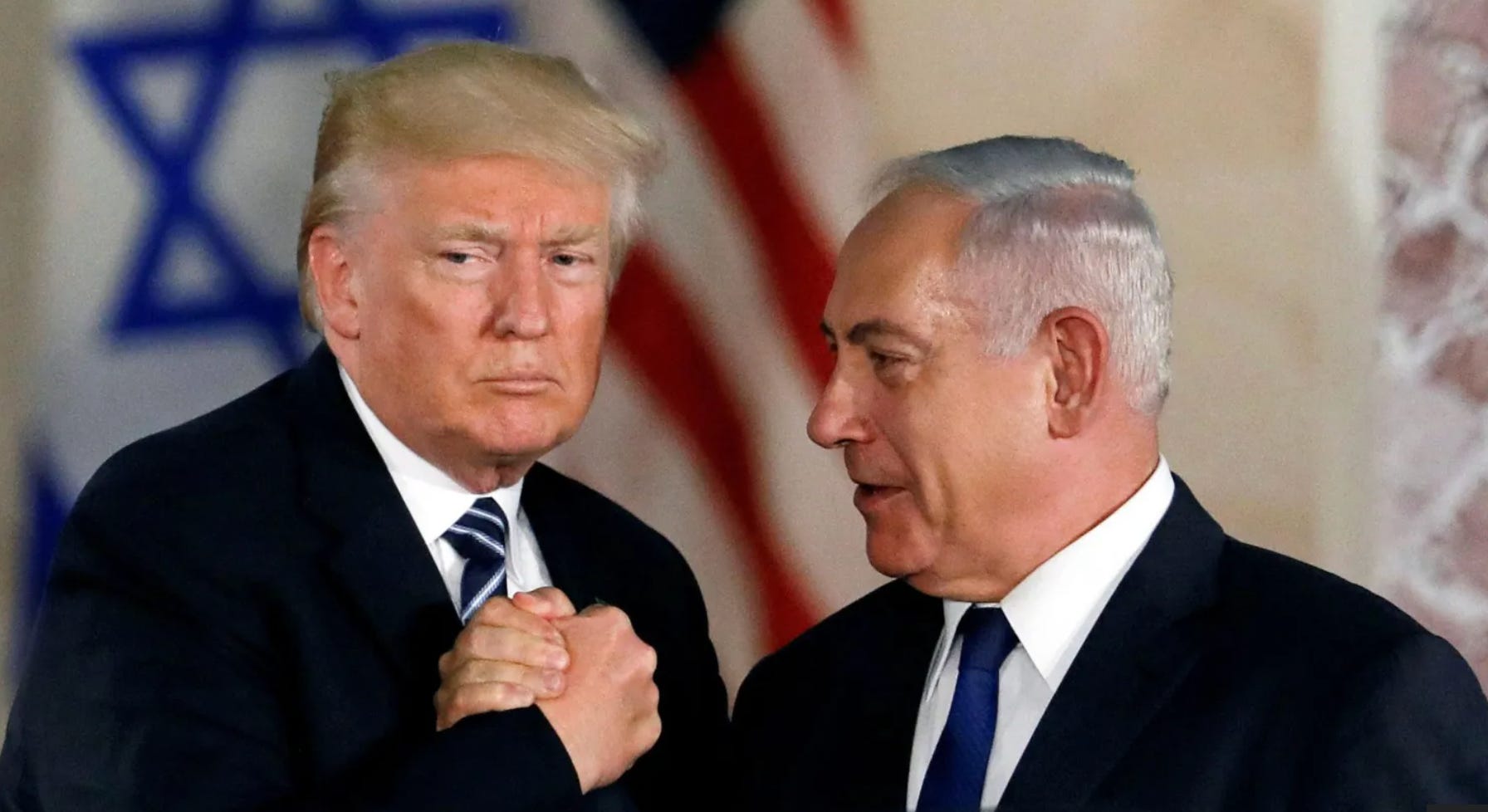
I think Iran deserves some credit right now - as hard as it is for Americans to give it - for an intelligent and agile military, diplomatic and strategic response to illegal US/Israeli aggression. This is not to say that the Islamic Republic should be admired for an approach that imposes tremendous pain on the Iranian people, both before and after February 28. That, in a way, is tragic. It is to say, instead, that if Tehran decided that regime survival was its number one priority - which is a very normal decision for a state to make - it has done a good job.
Phillips O’Brien has written an excellent piece on Substack outlining three initial lessons from the US/Israeli war on Iran. (You may recall that I consider O’Brien the most insightful military and strategic analyst writing these days, at least in English.) He describes the conflict so far as more a battle than a war, interesting for what it reveals about the capacity of the adversaries. Here is a link - it is very much worth reading, and ventures a bit beyond military analysis to wider strategic considerations.
O’Brien does an excellent job at dissecting the fundamental errors and shortcomings of the American side in this conflict. I think the Iranian side deserves more credit, however, for playing a relatively weak hand with intelligence, flexibility, and strategic foresight.
A lot of attention has been paid to Tehran’s closure of the Strait of Hormuz. This was very predictable, of course, though evidently not foreseen by Trump and - for all practical purposes - the Pentagon. Retaliatory strikes against Iran’s neighbors with friendly ties to the US and Israel, and against American facilities in those countries, were also no surprise, even if we were not adequately prepared for them. Both of these expected moves have been executed quite effectively, and have increased the cost of the conflict to others, focused pressure on Washington, and cast doubt on the strategic orientation of Iran’s Gulf neighbors.
It’s the “inclusion” of Lebanon and Israel’s military operations in that country in the ceasefire and potential peace process that were a sort of master stroke on Tehran’s part. If, as seems pretty evident, Trump and the US are far more eager - even desperate - than the Islamic Republic for an end to the war, then this linkage is a potent mechanism to advance Iran’s objectives. It is putting heavy strain on US-Israeli relations when these were already on a steep downhill slide. It is creating additional complications for Arab states in their orientation toward Israel, the US, and the so-called “Arab street”. And it is further hammering home the basic weakness of the US, and Trump as the American leader, despite his insistence that Israel “has no choice” but to obey his directives, and that he is always “the boss.”
American hardline critics of the Obama-era Joint Comprehensive Plan of Action (JCPOA) nuclear agreement with Iran ranted endlessly that it did not include enough issues, such as Iran’s missile program and its regional “proxies” (Hezbollah, Hamas, and later the Houthis). This - in addition to Trump’s personal envy of and animus toward Obama - helped convince Trump to cancel the JCPOA in 2018 and impose “maximum pressure” sanctions on Iran in pursuit of a broader deal, an approach that was stupidly continued under Biden. Netanyahu and Israel played a major role in pushing Trump, Washington hardliners and the Biden administration in this foolish direction. It is therefore interesting and ironic that Tehran - in this moment of tactical and perhaps even strategic advantage - has managed to include its favorite regional issue - Israel - in negotiations to end the conflict. The US has gone along with Iran’s demand so far, even if Israel has resisted. Since separating the US from Israel is a longstanding Iranian goal, that’s pretty masterful, if you ask me.
It is hard to say where the Islamabad MOU stands at this point. But it reflects not only America’s strategic incompetence and weakness, or Trump’s utter foolishness. It has also shown that, in this more multipolar world in which power is distributed more broadly, so-called middle powers can, through their own wits and determination, gain advantage over - and potentially prevail over - apparently stronger adversaries. With a clearer understanding of its priorities, a stronger commitment to achieving its goals, and more agility in conducting military operations as well as traditional and pubic diplomacy, Iran has bested the United States. We have seen Ukraine do the same over the past year or two in its conflict with Russia. It is not just cheap drones. It is the result of a general diffusion of education, expertise, talent and resources to new centers of power, often middle or regional powers. Local initiative and innovation play a huge role. Ignoring or downplaying these factors has been a huge mistake.
All in all, the course of this war and the Islamabad MOU are a reminder of something that has never changed but has become more obvious in recent years - that human intelligence is distributed evenly across our planet, that good ideas can arise anywhere, that legitimacy and loyalty count, and that talent does not always chase money and move to the US.
So kudos to Iran - I don’t like the Islamic Republic regime, but in this case, it’s a matter or credit where credit is due.